A La Carte, Translated: Which Japanese Salon Add-Ons Are Worth Booking in 2026
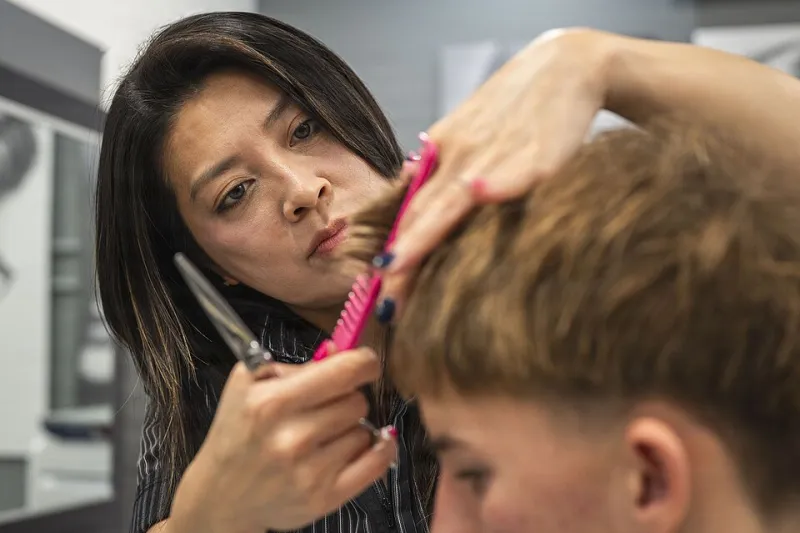
Photo: U.S. Air Force photo by Senior Airman James Johnson, Public domain, via Wikimedia Commons
Most US salon menus are built around the main event: cut, color, blowout. Japanese salon menus often read more like a tasting menu. There is a gloss, a scalp step, a dry-cut refine, a brow tidy, and a five-line explanation of each. None of it is fake luxury. But none of it is automatically worth your money, either.
The useful question is not 'What is this?' It is 'What does this replace, and how often will I need it?' Below is the translation I wish more front desks offered: what each add-on actually does, who it suits, and how to ask for it in plain English without turning a 90-minute appointment into a three-hour tab.
First, protect the main appointment
An add-on should support the cut or color, not compete with it. If you are getting highlights, skip the scalp massage upgrade and take the gloss. If you are getting a precision cut, book the dry-cut refine. If you are already fried from a summer of bleach, do not stack a protein pack and a gloss and a head spa in one visit. Pick one repair step and give it room to work.
A good rule for 2026: two add-ons maximum per visit. One for the hair, one for the scalp or brows. Anything beyond that is usually a scheduling problem dressed up as self-care.
1. Clear gloss or tone-on-tone gloss
What it is: A shine and tone service that sits on the surface of the cuticle. It is not a dye job with lift. Think of it as a topcoat that makes color look fresher and hair look less tired.
Who it suits: Anyone with dull ends, faded balayage, or gray that needs blending without commitment.
Timing: 15 to 25 minutes at the bowl. Results last four to six weeks.
Ask for: 'A clear gloss, no lift, just shine and a little tone.' If you have color, add: 'Tone-on-tone only.'
Skip if: Your hair is already very porous and you have not had a trim in months. Gloss on split ends is a temporary shine, not a repair.
2. Dry-cut refining
What it is: The stylist finishes the shape after blow-drying, checking how the hair falls when it is not slicked down with water. It is less a separate service than a second pass with scissors.
Who it suits: Fine hair, cowlicks, curtain bangs, and anyone who has ever loved a wet cut and hated it two days later.
Timing: 10 to 15 minutes. Book it as a note on the cut, not a separate appointment.
Ask for: 'Can we dry-cut the ends to refine the shape after the blowout?'
Skip if: You are already booked for a major restyle. Let the stylist cut the foundation wet first. Refining comes after.
3. Brow shaping
What it is: A tidy-up, usually with scissors and tweezers, sometimes with a razor. Japanese salons often treat brows as part of the face frame, so the shape is clean but not Instagram-boxy.
Who it suits: Anyone who wants a softer brow without committing to tinting or lamination.
Timing: 10 to 15 minutes.
Ask for: 'Brow shaping only, please. No tint, no wax on the skin.'
Skip if: You are already seeing a brow specialist you trust. Do not let a hair appointment become a brow experiment.
4. Seasonal scalp care
What it is: A targeted cleanse and hydration step at the shampoo bowl. In winter it is about flaking and tightness; in summer it is about oil, sweat, and UV. It is not a medical treatment.
Who it suits: Anyone with a dry, itchy, or oily scalp who notices a difference between seasons.
Timing: 10 to 20 minutes.
Ask for: 'A short scalp care add-on focused on cleansing and hydration. Not a full head spa.'
Skip if: You have active irritation, sores, or a diagnosed scalp condition. See a dermatologist, not a salon menu.
5. The 15-minute head spa
What it is: A water-and-massage reset at the bowl. The full 60-minute version is lovely, but the mini version is the practical add-on for a normal salon visit.
Who it suits: People who carry tension in the jaw and neck, and anyone who needs the appointment to feel like a pause rather than a task.
Timing: 15 minutes. Do not book it after a double-process color unless you have nowhere to be.
Ask for: 'The short head spa add-on, please. Fifteen minutes, no upgrade.'
Skip if: You are already booked for a cut, color, and gloss. That is enough time in the chair.
6. Moisturizing hair pack
What it is: A mid-lengths-and-ends treatment, usually a cream or gel that sits for 10 minutes. It is softer and less risky than a hard protein treatment.
Who it suits: Dry ends, coarse hair, and anyone who heat-styles without a heat protectant.
Timing: 10 minutes. Often bundled with the shampoo.
Ask for: 'A moisturizing hair pack for the ends, no heavy protein.'
Skip if: Your hair is fine and already limp. Moisture is not the missing piece for everyone.
7. Face-frame and bang trim
What it is: A small maintenance cut around the perimeter. It keeps curtain bangs from turning into sideburn curtains.
Who it suits: Anyone growing out bangs, maintaining a face frame, or stretching a full cut by a few weeks.
Timing: 10 minutes.
Ask for: 'A face-frame trim only. I am trying to stretch my next full cut.'
Skip if: You want a whole new shape. That is a consultation, not an add-on.
The three I would skip
Lash extensions at a hair salon
They can be excellent, but they are a separate skill and a separate maintenance cycle. If you already have a lash artist, do not cheat on her with a salon add-on menu. If you are curious, book a standalone appointment, not an add-on after color.
Nail add-on
Same logic. A quick polish is not the problem; the problem is the 30 minutes it adds to an already long appointment. Your colorist is not watching the clock for your manicure.
The mega head spa upgrade on a color day
A 60-minute head spa is worth a dedicated visit. Stacked onto a full highlight and gloss, it becomes a test of patience. Book it as its own appointment. Your scalp will get more out of it, and your stylist will not be rushing the rinse.
How to ask without overbooking
Use a simple script: 'I have a cut booked. I would like to add one thing: a clear gloss, about 20 minutes. If that makes the appointment too tight, I would rather rebook the gloss than rush the cut.' That sentence does two things. It tells the front desk you are not a bottomless add-on order, and it gives the stylist permission to protect the main service.
The Japanese salon menu is not a test of how much you can afford. It is a list of small tools. In 2026, the smart booking is the one where every add-on has a job.