The Empty Chair Next to You: What Tokyo’s Solo-Client Salons Actually Sell—and How to Spot a Fake in the U.S.
Photo: Unknown authorUnknown author, Public domain, via Wikimedia Commons
Walk into certain Tokyo salons and the first thing you notice is what’s missing: no second client under a dryer, no assistant whisking away a color bowl, no stylist glancing at the clock while another appointment waits. It’s one stylist, one client, one block of time. The model has been quietly growing in Japan for years, and in 2026 it’s showing up in U.S. cities under labels like private suite, solo studio, and single-chair appointment.
That sounds luxurious, but the real product isn’t marble mirrors or a matcha station. It’s attention without overlap. The question for U.S. readers is simpler: does that attention improve your hair enough to justify the higher ticket?
What a solo-client salon actually is
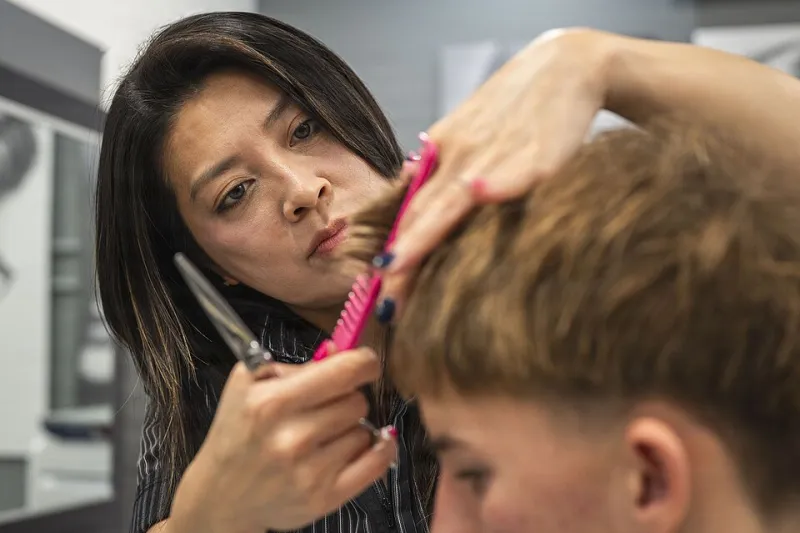
A true one-chair salon means your stylist isn’t juggling anyone else during your service. They mix the color, wash your hair, cut, dry, and check the finish. There’s no handoff to an junior for the shampoo and no overlapping double-booking where someone else’s processing time eats into your consultation.
In the U.S., the same idea can look like a single rented suite, a stylist working alone in a small studio, or a salon that blocks extra time for one client at a time. Those aren’t identical setups. A private suite may offer real privacy but less backup if something goes wrong with a complex color. A solo stylist may be excellent, but they’re also the only person who can answer the phone, mix the toner, and fix the blow-dryer. The label is less important than the schedule.
Where the model changes the appointment
Pacing
The biggest difference is buffer time. A solo stylist can build in a longer consultation, a slower wash, and a proper dry-and-check without rushing to the next chair. That matters most when you’re changing your shape, growing out a cut, or dealing with a sensitive scalp. It matters less for a routine trim you could do in your sleep.
Consultation depth
With no overlap, a stylist can ask more questions and actually watch how your hair falls when you move. They can test a section, adjust, and explain what they’re doing. In a busy salon, that conversation often gets compressed into the first ten minutes. In a solo chair, it can unfold through the whole appointment.
Privacy
This is a real benefit for clients with hair loss, scalp conditions, post-partum shedding, or plain old salon anxiety. Not everyone wants an audience while their part line is examined under bright light. A private room or a quiet corner can make the difference between booking and avoiding the appointment entirely.
Pricing
One client at a time means fewer clients per day. Rent, supplies, and the stylist’s time still have to be covered. In major U.S. metros in 2026, a solo-chair cut might run $90 to $180, with color often starting around $200 and climbing quickly. That doesn’t automatically make it better than a $70 cut at a busy neighborhood salon. You’re paying for a different structure, not a guaranteed miracle.
When the premium is worth it
The private-chair model earns its price when you need continuity and room to talk. If you’ve had three rushed color corrections, a complicated grow-out, or a stylist who never quite listened, the slower format can be a reset. It’s also worth considering if you have scalp sensitivity, a visible hair-loss concern, or a texture that needs section-by-section attention.
It can also make sense if you want one person to own the whole relationship: same stylist, same notes, same formula, same conversation about maintenance. For frequent clients, that consistency can be more valuable than a trendier salon with a rotating cast.
When to skip it
If you want a simple trim, a standard blowout, or a last-minute appointment, the premium may not buy you much. A well-run traditional salon can be perfectly efficient. Skip the solo-chair splurge if the stylist can’t clearly explain what extra time you’re getting, if the price is higher but the appointment is still rushed, or if the private setup lacks support for the service you need.
Be wary of a salon that says “private” but only means a curtain between chairs. Ask whether the appointment actually overlaps with anyone else. A solo studio with no assistant may also be a poor fit for a major color correction that needs extra hands, so ask how they handle complex work.
Questions to ask before you book
- Will another client be in the salon during my appointment?
- How much of the service will the stylist personally handle?
- How long is the consultation, and is it built into the price?
- What happens if the appointment runs long? Is there a buffer?
- Is the quoted price all-in, including wash, dry, and styling?
- How do you document color formulas and cutting notes?
- Can you show recent work on hair like mine?
- If my color needs correction, do you refer out or bring in help?
- What is the cancellation policy, and how far out are you booked?
The honest math
Don’t compare a solo-chair price to a busy-salon price without comparing the appointment. If the solo chair gives you 30 extra minutes of consultation, a private room, and a stylist who isn’t splitting attention, the higher fee may be reasonable. If you’re paying $60 more for the same rushed wash-and-cut in a quieter room, you’re buying atmosphere, not service.
The one-chair model is not the future of every salon, and it doesn’t need to be. It’s a specific tool for clients who value pacing, privacy, and continuity. In 2026, the smart move is to treat the label as a question, not a guarantee. Ask what the chair actually buys you.